
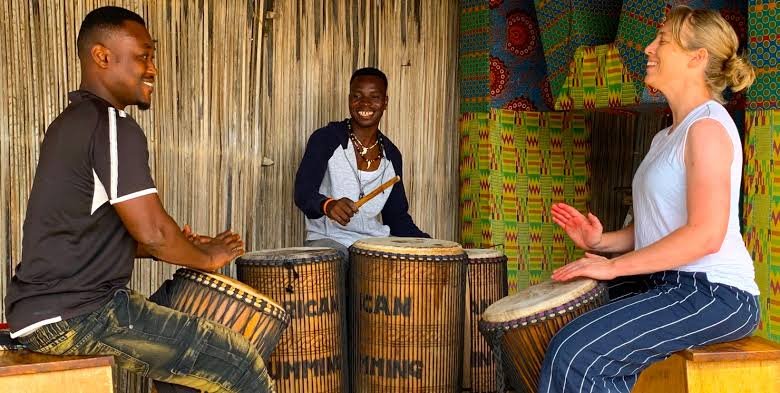
Long before drum machines and digital audio workstations, rhythm on the African continent was carried by hands, wood, and skin. Today, African percussion instruments such as the djembe, the talking drum, and the shekere are finding new life inside modern studios, sampled, layered, and reimagined by producers working across Afrobeats, Amapiano-adjacent productions, gospel, and global pop collaborations. Understanding these instruments is essential to understanding why African rhythm continues to feel distinct, even when it is filtered through modern software.
The Instruments Behind the Rhythm
The Djembe
Originating from West Africa, the djembe is a goblet-shaped hand drum capable of producing a wide range of tones, from deep bass notes to sharp, cutting slaps. Its versatility has made it one of the most recognizable African percussion instruments internationally, used both in traditional ceremonial contexts and in contemporary recordings that want an organic rhythmic texture.
The Talking Drum
Known for its ability to mimic the tonal patterns of spoken language, the talking drum is played with a curved stick while the drummer squeezes cords under the arm to change pitch. This instrument has a long history in West African musical and communicative traditions, and its distinctive pitch-bending sound has become a signature texture in modern Afrobeats production.
The Shekere
A gourd covered in a woven net of beads or shells, the shekere produces a shaking, textured percussion sound. It is often used to add rhythmic layering beneath a main drum pattern, and its sound has been widely sampled in contemporary production libraries.
The Udu
A clay pot drum with an additional hole that produces a deep, resonant bass tone when struck or slapped, the udu originates from pottery traditions and remains valued for the warmth it adds to percussive arrangements.
From Ceremony to Studio: A Shift in Context
Traditionally, many of these instruments were tied to specific social functions: ceremonies, storytelling, communal gatherings, and rites of passage. Rhythms were not simply decorative, they carried meaning and were often understood within a community context. As these instruments moved into commercial recording studios, producers had to find ways to translate that meaning into a format suited for popular music, often preserving the rhythmic feel while adapting the instrument’s role within a modern arrangement.
This transition has not erased the instruments’ cultural weight. Many producers and artists are intentional about crediting traditional origins, working with trained percussionists, and using authentic recordings rather than relying solely on generic sample packs.
How Producers Are Using These Instruments Today
- Live layering — recording a percussionist alongside programmed drums to add organic texture and human timing imperfections.
- Sampling — capturing short percussion hits and integrating them into sample-based production software.
- Hybrid rhythm sections — combining traditional percussion with electronic drum patterns to create a rhythm that feels both rooted and current.
- Sound design — processing percussion recordings through effects to create atmospheric or textural elements rather than straightforward rhythm.
Comparing Traditional Instruments in Modern Contexts
| Instrument | Traditional Role | Common Modern Use |
| Djembe | Ceremonial and communal rhythm | Live percussion layering, sampled hits |
| Talking Drum | Tonal communication and storytelling | Signature pitch-bend textures in Afrobeats |
| Shekere | Rhythmic accompaniment | Layered shaker textures in production |
| Udu | Bass tone accompaniment | Warm low-end percussion in arrangements |
Practical Tips for Producers Working With African Percussion
- Record with a trained percussionist whenever possible, rather than relying only on presets, to capture authentic phrasing.
- Learn the basic rhythmic patterns associated with each instrument before attempting to reprogram them electronically.
- Credit traditional instruments and the musicians who perform them in liner notes or production credits.
- Avoid flattening an instrument’s dynamic range through excessive compression, since much of its character comes from tonal variation.
- Blend organic and electronic elements gradually, listening for how the two interact rather than layering everything at full volume.
Conclusion
African percussion instruments carry centuries of rhythmic knowledge, and their presence in modern production is not simply an aesthetic choice, it is a continuation of a living tradition. As African genres continue to influence global music, the producers who understand the instruments behind the rhythm, not just the sounds they can sample, are the ones creating work that feels genuinely rooted.
Final Thoughts
The relationship between traditional percussion and modern production is still evolving. As more artists and producers collaborate directly with percussionists, the line between “sampled texture” and “living instrument” is likely to become an increasingly important distinction in how African music is made and credited.
Frequently Asked Questions
What are the most commonly used African percussion instruments in modern music?
The djembe, talking drum, shekere, and udu are among the most widely used, valued for their distinct tonal qualities and rhythmic versatility.
Why does the talking drum sound different from other drums?
Its pitch can be altered while playing, through cords tightened under the arm, allowing the drummer to mimic tonal speech patterns rather than producing a fixed pitch.
Do producers still use live percussionists, or mostly samples?
Both approaches are common. Many producers use samples for convenience but increasingly seek live percussionists to capture more authentic phrasing and dynamics.
Is it disrespectful to sample traditional instruments without context?
Opinions vary, but many musicians and cultural advocates encourage crediting the instrument’s origin and, where possible, working directly with practitioners rather than using anonymous samples.
Can these instruments be learned by musicians outside Africa?
Yes, many percussionists worldwide study these instruments, often through direct instruction from practitioners, workshops, or specialized music programs.