
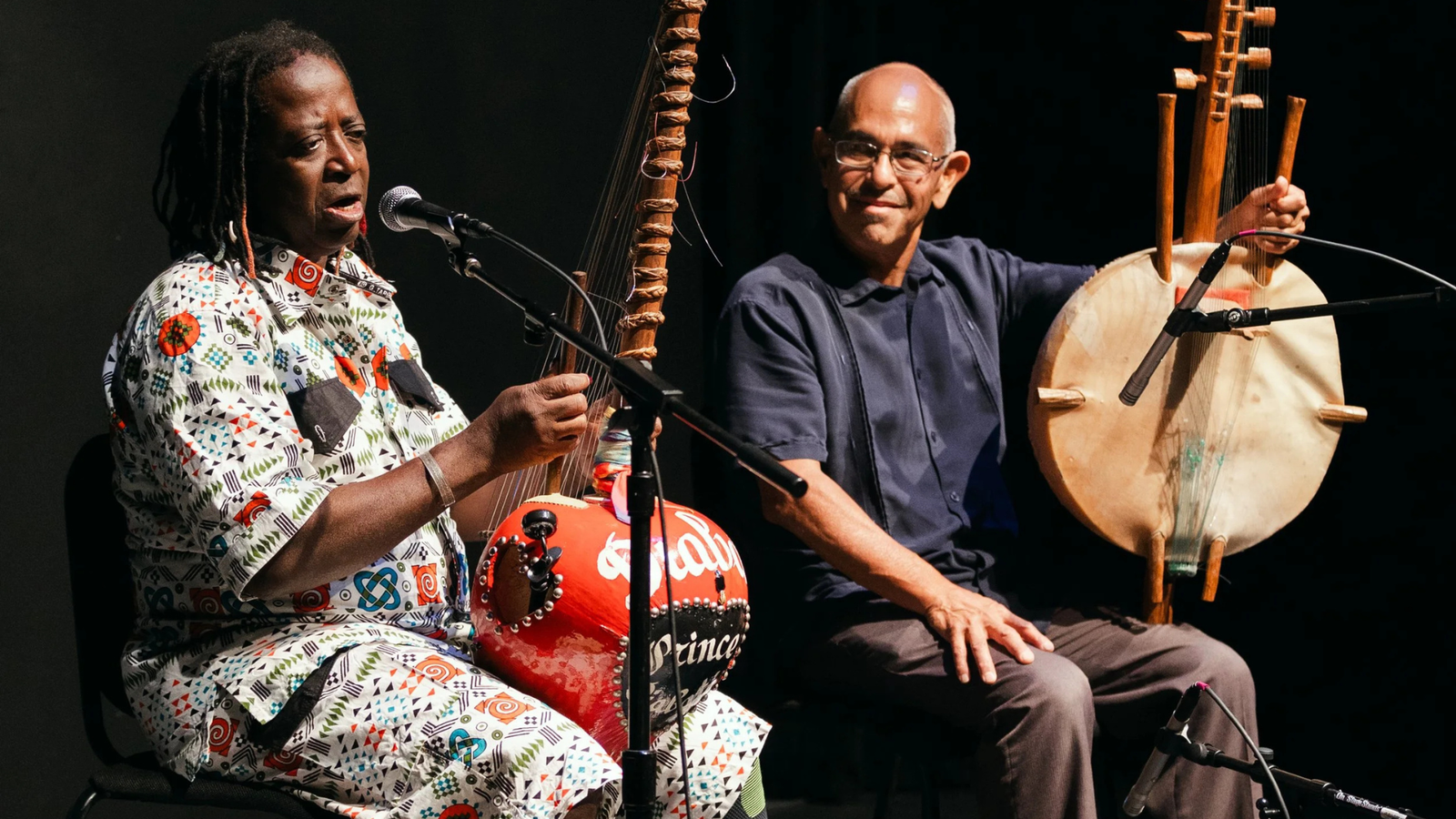
West African griots occupy a role in music and culture that has no direct equivalent in Western entertainment: part historian, part musician, part genealogist, and part social commentator. For centuries, griot families have preserved oral history through song, passing down stories, lineages and moral lessons across generations. Understanding the tradition of West African griots is essential to understanding how music in the region has always functioned as more than entertainment – it has served as memory itself, carried forward through melody, rhythm and spoken word long before written records existed in many communities.
Who Are the Griots?
Griots, also known by regional terms such as jeli or gewel, are members of hereditary castes traditionally found among the Mande, Wolof, Fula and other ethnic groups across West Africa, particularly in areas that are now Senegal, Mali, Guinea and Gambia. Griot status is typically inherited through family lineage, meaning a griot is born into the role rather than choosing it as a career. This hereditary structure has helped preserve specialized musical knowledge and technique across many generations.
The Griot’s Social Function
Historically, griots served kings, nobles and prominent families as advisors, praise singers and keepers of oral history. Their songs recounted genealogies, recorded major events, and offered guidance during disputes, giving them a position of both respect and social complexity, since they were essential to court life yet traditionally occupied a distinct caste separate from nobility.
Griots as Musicians and Storytellers
Beyond their historical and advisory roles, griots are accomplished instrumentalists and vocalists. Their performances weave narrative, praise and commentary into extended musical pieces, often improvised in the moment to suit the audience or occasion. This combination of storytelling and musicianship is central to why griots are frequently described as living libraries.
Instruments Central to Griot Tradition
Griot music is inseparable from a specific set of traditional instruments, many of which remain closely associated with griot families to this day:
- The kora, a 21-string harp-lute traditionally played by Mande griots
- The balafon, a wooden xylophone-style instrument with resonating gourds
- The ngoni, a smaller lute-like instrument considered a precursor to instruments found elsewhere in the African diaspora
- Various hand drums used to accompany praise singing and narrative performance
- The tama, a talking drum capable of mimicking speech patterns and tonal language
Griots and Senegal’s Musical Identity
In Senegal, griot tradition remains deeply embedded in public life, appearing at weddings, naming ceremonies and civic celebrations. Senegalese griot families have also played an important role in shaping the country’s broader popular music scene, with griot vocal techniques and rhythmic sensibilities informing genres that later gained international attention. Many contemporary Senegalese musicians can trace their vocal or instrumental training directly back to griot lineage, illustrating how deeply this tradition continues to shape the country’s musical output.
Griot Traditions Beyond Senegal
While Senegal is often highlighted for its griot culture, the tradition extends across a wider swath of West Africa, with regional variations in instrumentation, language and performance style. Despite these differences, most griot traditions share a common emphasis on oral history, praise singing and hereditary transmission of musical knowledge.
Griot Tradition Compared Across Regions
| Region | Common Term | Signature Instrument |
| Senegal / Gambia (Wolof) | Gewel | Tama (talking drum) |
| Mali / Guinea (Mande) | Jeli | Kora |
| Broader Sahelian region | Griot | Balafon and ngoni |
Why Griot Tradition Matters to Modern African Music
The influence of griot tradition extends well beyond traditional performance settings. Many contemporary African and diaspora musicians cite griot storytelling techniques as an influence on their songwriting approach, particularly the practice of weaving personal or communal narrative directly into musical performance. This lineage connects centuries-old oral tradition to modern songwriting practices across the continent and its diaspora.
Practical Tips for Learning About Griot Music
- Start with recordings of kora performances to hear the melodic complexity central to Mande griot tradition
- Pay attention to the improvisational praise-singing sections, which often shift depending on the audience present
- Research specific griot family names, since many families have documented histories spanning several centuries
- Compare talking drum rhythms to spoken language patterns to understand how tonal communication works in griot performance
- Look for documentaries and academic ethnomusicology resources rather than casual summaries, given the depth of this tradition
Conclusion
West African griots represent one of the most sophisticated and enduring musical traditions on the continent, blending history, genealogy, diplomacy and artistry into a single hereditary role. Their influence continues to shape both traditional and contemporary African music, making griot tradition essential context for anyone studying the region’s musical heritage.
Final Thoughts
As oral traditions face pressure from changing social structures and shifting economies, griot families continue adapting their role while preserving core techniques passed down for generations. Their resilience offers a compelling reminder that music can serve as both art and archive at the same time.
FAQ
What is a griot?
A griot is a hereditary musician, storyteller and oral historian found in various West African ethnic groups, traditionally responsible for preserving genealogies and community history through song.
Which instruments are associated with griot tradition?
Common instruments include the kora, balafon, ngoni and tama, each associated with specific regional griot traditions.
Are griots only found in Senegal?
No, griot tradition extends across several West African countries and ethnic groups, including communities in Mali, Guinea and Gambia, though Senegal is often highlighted for its prominent griot culture.
Is the griot role inherited?
Yes, griot status is typically passed down through family lineage rather than chosen as an independent career path.
How does griot tradition influence modern music?
Griot storytelling techniques and vocal styles continue to inform songwriting approaches among contemporary African and diaspora musicians, particularly the practice of blending narrative directly into musical performance.